Check out our work and its impact.

A grand opening is your biggest PR opportunity, but only if you plan for it. Learn how to build a strategic grand opening campaign that drives media coverage, influencers, and long-term buzz.
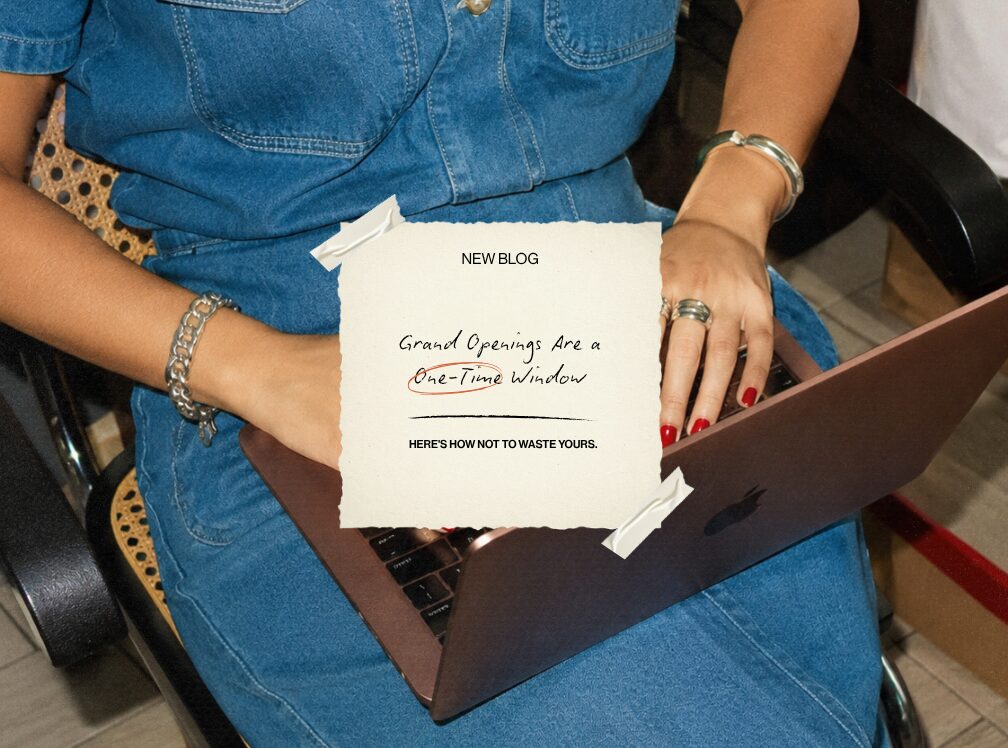
You only open once. Unless you’re a second location, in which case you only open that location once. The principle stands.
A grand opening is the single highest-leverage PR moment most food, beverage, and hospitality brands will ever have. The story is inherently newsworthy. The timing is real. The emotion is genuine. Everyone in your orbit, from your team to your neighborhood to your future regulars, is paying attention in a way they won’t be six months from now when you’re just another option on the block.
And yet, the grand opening is also the most consistently underprepared PR moment we encounter. Not because brands don’t care. Because they’re simultaneously building out a space, hiring a team, finalizing a menu, and trying to keep the lights on, and somewhere in there, the media strategy becomes “we’ll post about it on Instagram and hope the right people see it.”
Hope is not a strategy. We say this with great affection.
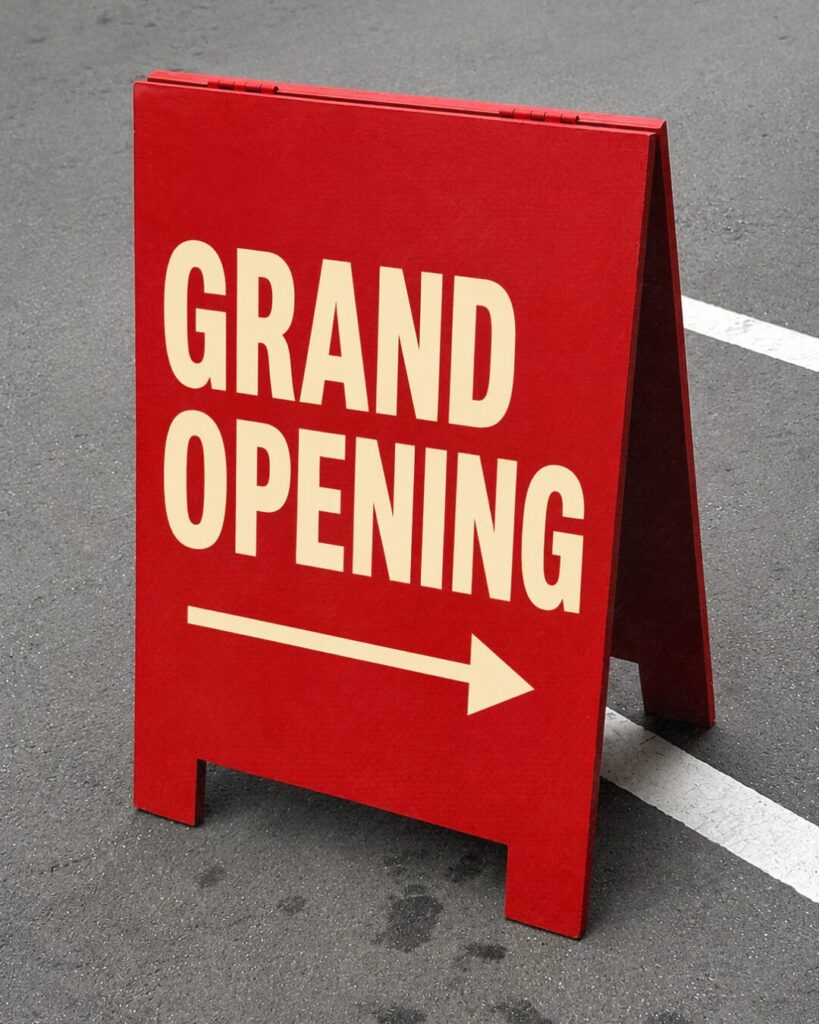
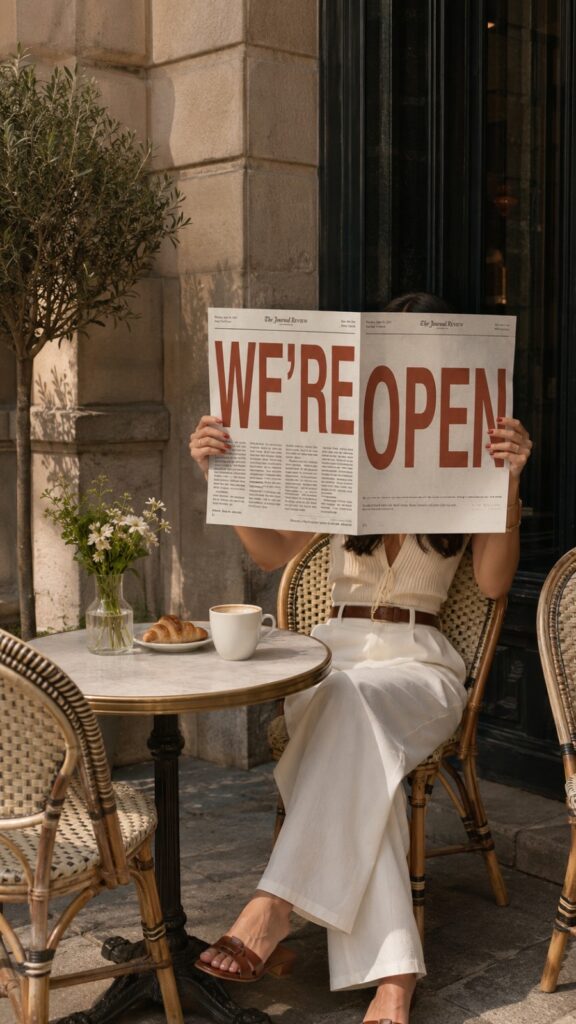
Let’s establish what we mean, because “grand opening PR” means something specific and it is not the same as posting an announcement.
A real opening campaign has multiple phases, and each one serves a different purpose. Skipping any of them costs you coverage you can’t get back.
Pre-Opening (6 to 8 Weeks Out)
This is where the story gets built. A PR team uses this window to develop the narrative around your concept, identify the right media and influencer contacts, and begin warming those relationships before a pitch ever lands in an inbox.
A cold pitch sent two days before your opening is a long shot. A relationship built over several weeks, with a compelling story and a personal invitation, is how you fill a room with the right people.
This is also when the drumbeat starts. Teaser coverage, “coming soon” features, neighborhood interest pieces. These create anticipation and give future opening coverage something to reference. For hotels or multi-concept brands, we recommend extending that runway to 8 to 12 weeks, because the storytelling layers are deeper and long-lead publications need more time.
Friends and Family
We don’t believe in soft launches for media. Restaurants today are operating on margins that make extended preview periods a genuine financial strain, and more importantly, journalists deserve to experience your concept at its best, not while your team is still finding its rhythm. Inviting press before you’re ready is not a soft launch. It’s a gamble with your first impression.
What we do instead is a friends and family event in the week leading up to opening. This is exactly what it sounds like: neighbors, family, trusted community members filling your seats so your team can run a full service on a forgiving crowd. The experience is real. The pressure is not. And when opening day arrives, your staff is confident rather than operating on a wing and a genuine prayer.
The Opening Event
By the time your ribbon is cut, the story should already be in motion. Media invites should already be out. Opening buzz should already be building. The event itself is the culmination of a campaign, not the starting gun.
This is where the right guest list matters enormously. The opening event is your best opportunity to have media, influencers, community figures, and potential regulars in the room at the same time, experiencing your concept with full energy and intentional hospitality. Getting that room right is a strategic exercise, not a numbers game.
Individual Visits: Post-Opening
Not every journalist or influencer will make it to the opening event. Some have conflicts. Some need to visit on their own terms, at their own pace, without the energy of a packed room affecting their experience. This is not a consolation. It is often where the best coverage actually comes from.
The weeks immediately following the opening are when we schedule individual media and influencer visits with the people who matter most for your long-term narrative. A writer doing a considered review wants to sit quietly, order thoughtfully, and form an honest impression. That experience is entirely different from an opening event, and it produces entirely different, often deeper coverage.
This phase is also where you capture the outlets and voices you didn’t get in the first round. One strong placement a month after opening can carry more weight than five mentions on opening week, because it signals staying power rather than novelty.
This year has been a busy one for openings in our world, and each one has reinforced the same truth: the brands that commit to the full campaign arc outperform the ones that treat the opening as a single event.
COVE’s new Austin location brought a known brand into a new neighborhood context, which required a different kind of storytelling than a first opening. The challenge wasn’t “tell people we exist.” It was “tell people why this move matters for a brand that’s been in Austin for a decade.” That’s a nuance that takes real media relationships to execute.
Rêve Plastic Surgery’s new location outside of Austin in Dripping Springs, TX, required precision in how the story was told, not just who it was told to. A new location in a medically adjacent category demands credibility-forward coverage, and the difference between a surface-level announcement and a substantive media narrative is significant.
Ceremony Botanical Brewing’s launch was a reminder that grand opening campaigns are not exclusively for brick-and-mortars. A product launch into a competitive market requires the same intentional narrative building, media seeding, and influencer activation. The mechanics are different. The principle is identical.
Alice Poulain’s grand opening was the kind of debut that rewards a strong PR campaign because the concept itself is distinctive. In a competitive restaurant market, distinctiveness doesn’t sell itself. It needs to be placed with the right voices, in the right outlets, with enough lead time for the story to land with weight.
PADEL39 opening an East Austin location represents something interesting from a PR standpoint: a sport with a passionate niche audience and enormous crossover potential. The opening campaign needs to speak fluently to both. That’s a strategic conversation, not just an announcement.
Starting too late. The most common issue by far. Six to eight weeks is the minimum runway for a well-executed opening campaign. We’ve worked miracles in less time, but we shouldn’t have had to, and the results showed the difference.
Inviting press before you’re ready. We have strong feelings about this one. Journalists are not beta testers. A critic who visits on a night when the kitchen is still finding its footing will write about what they experienced, not what you intended. There is no PR recovery that fully overrides a bad first impression from a credible outlet. Your friends and family event is there to protect you from this scenario. Use it.
Treating the opening event as the only media moment. Opening night is electric and chaotic in equal measure. Some journalists will love it. Others will want nothing to do with a packed room on night one. Planning for individual post-opening visits isn’t a backup plan. It’s a core part of the strategy.
Inviting everyone and targeting no one. A long list of media and influencers with no vetting or prioritization is not an outreach strategy. Who writes about your category, your neighborhood, your cuisine type? Who has the audience you actually want to reach? That specificity is what turns an invite list into a coverage list.
Not having assets ready. We have watched beautiful spaces open with no professional photography, no brand kit, and no high-resolution images to send to editors. Media cannot write about you without imagery. This is non-negotiable, and it is also not a surprise. You know the opening is coming. Plan for it.
Stopping the moment the doors open. The brands that sustain coverage after opening are the ones that planned for it. What’s the story in month two? What’s the seasonal menu angle? Who’s the chef profile that goes to a long-lead publication? Post-opening PR is where casual curiosity becomes lasting reputation.
Product launches, pop-ups, brand activations, and debut events all follow the same fundamental arc. The window of genuine newsworthiness exists whether you’re opening a restaurant, launching a beverage line, or throwing a launch party for a brand that lives primarily online.
What changes are the tactics and the outlets. What doesn’t change is the need for a narrative, a timeline, and a media strategy built before the moment arrives.
When we executed a local grand opening campaign for Café Largesse in Austin, TX, we produced 25 press hits totaling 435 million impressions and 27 influencer posts generating over 2 million social media impressions. That’s not a number we’re citing to brag. It’s a number we’re citing because it reflects what is possible when a great concept gets the media strategy it deserves.
That kind of coverage doesn’t happen by accident, and it doesn’t happen because a publicist sent one email. It happens because the story was built carefully, the right relationships were already in place, and every phase of the campaign was executed with intention.
That’s the standard we hold openings to. And it’s the standard your opening deserves.
Resplendent Agency is a boutique PR and social media agency with offices in Austin, Texas and Richmond, Virginia. We specialize in food and beverage, hospitality, travel, CPG, and lifestyle brands. Reach out to learn how we can build a media strategy that works as hard as you do.
Check out our work and its impact.