Check out our work and its impact.

Great products don’t sell themselves, great stories do. Learn how strong brand messaging transforms your PR, marketing, social media, and customer connection.
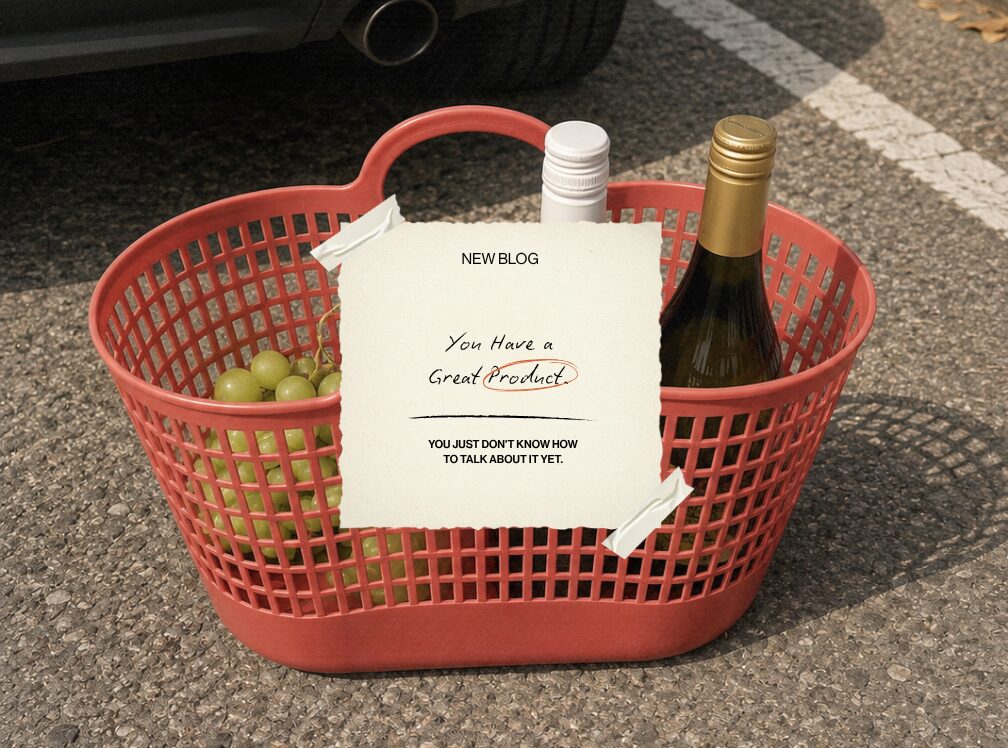
We have sat across from a lot of exceptional people who make exceptional things and cannot explain why what they make is exceptional.
Not because they don’t know. They know better than anyone. It’s in every decision they made building it, every ingredient they sourced, every aesthetic choice, every late night they spent getting it right. The depth of understanding is there.
What’s missing is the translation. The ability to take all of that internal meaning and distill it into something that lands with a stranger in 30 seconds.
This is not a failure. It is, in fact, one of the most common and most fixable problems a brand can have. But it does need to be fixed before you spend serious money on PR, social media, or marketing of any kind.
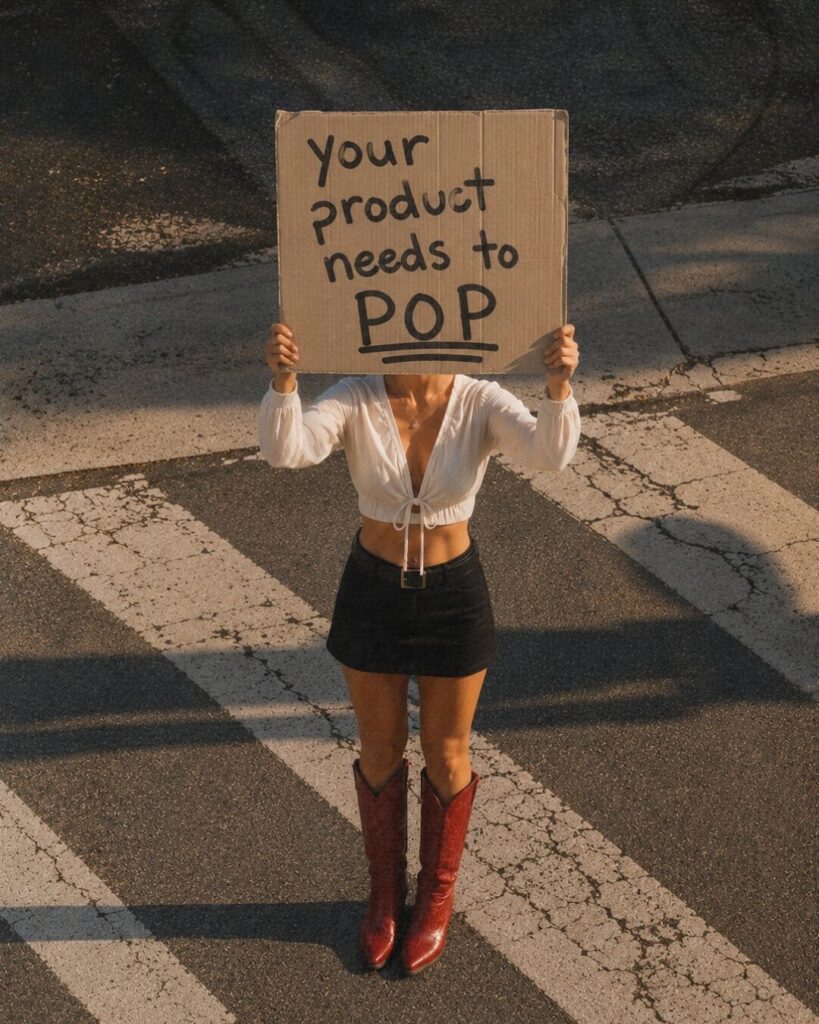
This is not an insult. It is a structural problem.
When you have built something from the ground up, you are too close to it to see it the way a stranger does. You know that the coffee beans are sourced from a single-origin farm in Oaxaca because you flew there and met the farmer and spent three years building that relationship. That’s remarkable. But when you describe your coffee to someone who doesn’t know you, you say “we use high-quality beans” because the whole story feels too long to get into.
The journalist, the influencer, the potential customer, the investor: they don’t have your context. They have your 30 seconds. And in those 30 seconds, they’re deciding whether your brand is interesting enough to pay attention to.
The Oaxaca story is interesting. “High-quality beans” is a sentence that has appeared in approximately 400,000 coffee brand descriptions.
The problem isn’t that you don’t have a story. It’s that the story you’re telling isn’t the one that actually makes you compelling.
A feature is a fact about your product. A story is the human meaning behind that fact.
Feature: We use locally sourced ingredients. Story: Our chef grew up in this neighborhood and has spent 15 years building relationships with the farms within 50 miles of this kitchen. Every ingredient on the plate has a face behind it and a field it came from.
Feature: We are woman-owned. Story: We opened this business because there wasn’t a single restaurant in this part of town that felt like it was made for the people who actually live here. Two women changed that.
Feature: Our product is made with American-grown pecans. Story: Third-generation pecan farmers. A family legacy translated into a product that didn’t exist until someone decided it should.
You see the difference. Features describe. Stories connect. And connection is what makes someone want to write about you, follow you, visit you, choose you over the eleven other options they could choose.
If you can answer these questions in clear, interesting language, you have a story. If you can’t, this is the work that needs to happen before the pitching does.
Why does this exist? Not “because we wanted to start a business.” What gap did you see? What was wrong with the existing options? What were you trying to create that didn’t exist yet?
Why you? What makes you, specifically, the right person to make this thing? Your background, your obsession, your experience, your community connection. Why is this authentic to where it comes from?
Why now? Is there something about this moment in culture, this neighborhood, this market, this trend that makes your brand particularly relevant right now? Timeliness is one of the most powerful narrative tools in PR.
Who is it for? The most interesting brands have a clear sense of who they’re speaking to. Not “everyone” (no brand is for everyone) but a specific person with specific values and a specific reason to care about what you’re doing.
What do you believe? Every brand has a point of view, whether it’s articulated or not. What does yours actually stand for? What would it refuse to do? What does it exist to celebrate?
These are not marketing questions. They’re the foundation everything else is built on.
This is where a lot of brands get tripped up. They do the work to develop a brand narrative once, usually when they’re launching, and then they treat it as permanent infrastructure.
But markets shift. Culture shifts. What was a differentiating angle two years ago may now be table stakes in your category. What felt like your primary story may have been eclipsed by something more interesting that has happened since.
Good brand messaging is a living document. It should be revisited when you expand to new markets, launch new products, rebrand, or notice that your pitches aren’t landing the way they used to. The story evolves because the brand evolves.
Pecana Nut Milk is a good example of this. We’ve worked with the brand since they were a mere idea, but the storytelling challenge was differentiation in a crowded alternative milk category saturated with national players. The story we built was anchored in third-generation pecan farming heritage and a Texas-rooted identity that no other brand in the space could claim. That story didn’t come from a generic “here’s what makes us different” exercise. It came from going deep on what actually made the brand distinct and finding the narrative thread that was both true and interesting.
The result wasn’t just better media coverage. It was a positioning foundation that supported retail expansion, buyer conversations, and consumer connection at the same time.
You describe your brand differently every time someone asks. This is common, and it’s a sign that the core narrative hasn’t been locked down yet.
Your pitches get ignored. If you’re reaching out to media or potential partners and hearing nothing back, it is very rarely because the journalist is too busy. It’s usually because the pitch didn’t give them a clear reason to care.
Your social media feels generic. When you look at your own feed, and it could belong to any brand in your category, your messaging hasn’t translated into content strategy.
You struggle to explain what makes you different from the competition without using the words “quality,” “passion,” or “authentic.” These words are not differentiators. They are expectations. Every brand claims them.
You get press, but nobody remembers the angle. A mention is not the same as a story. If your coverage is factual but not particularly compelling, the narrative may need sharpening.
That’s the work. And it’s our favorite kind.
Part of what we do at Resplendent is this: we sit down with brands, we ask a lot of questions, and we find the story that’s already there. Then we figure out who needs to hear it and how to get it in front of them.
We’re not here to put words in your mouth that don’t belong to you. We’re here to help you say the thing you already know in a way that makes someone else want to listen.
If you’ve ever felt like you have something great but can’t quite articulate why anyone should care, that’s the exact problem we’re built to solve.


Resplendent Agency is a boutique PR and social media agency with offices in Austin, Texas and Richmond, Virginia. We specialize in food and beverage, hospitality, travel, CPG, and lifestyle brands. Reach out to learn how we can build a media strategy that works as hard as you do.
Check out our work and its impact.