Check out our work and its impact.

Posting consistently isn’t enough. Discover the biggest social media mistakes food and beverage brands make and learn how to build a strategy that drives engagement, customers, and real business growth.
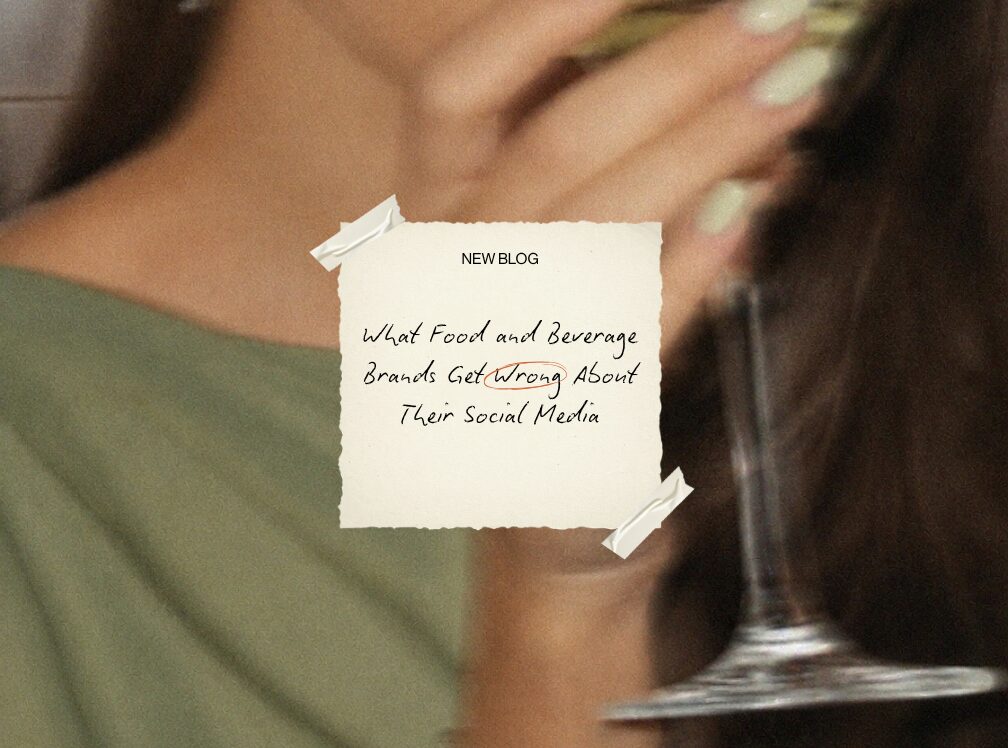
We want to start by saying: most food and beverage brands are trying. They’re posting consistently-ish. They’re shooting content on their phones. They’re using relevant hashtags from 2021. They’re doing the thing.
They’re just doing the wrong thing, often beautifully.
Social media for food and beverage brands is one of the most visually rich opportunities in marketing. And it’s also one of the most misunderstood. Because beautiful photography and a pretty grid, while not nothing, are not a strategy. And the gap between “we have an Instagram” and “our Instagram drives real business results” is where a lot of brands are quietly struggling.
Here’s where we see it go sideways most often, and what to do differently.
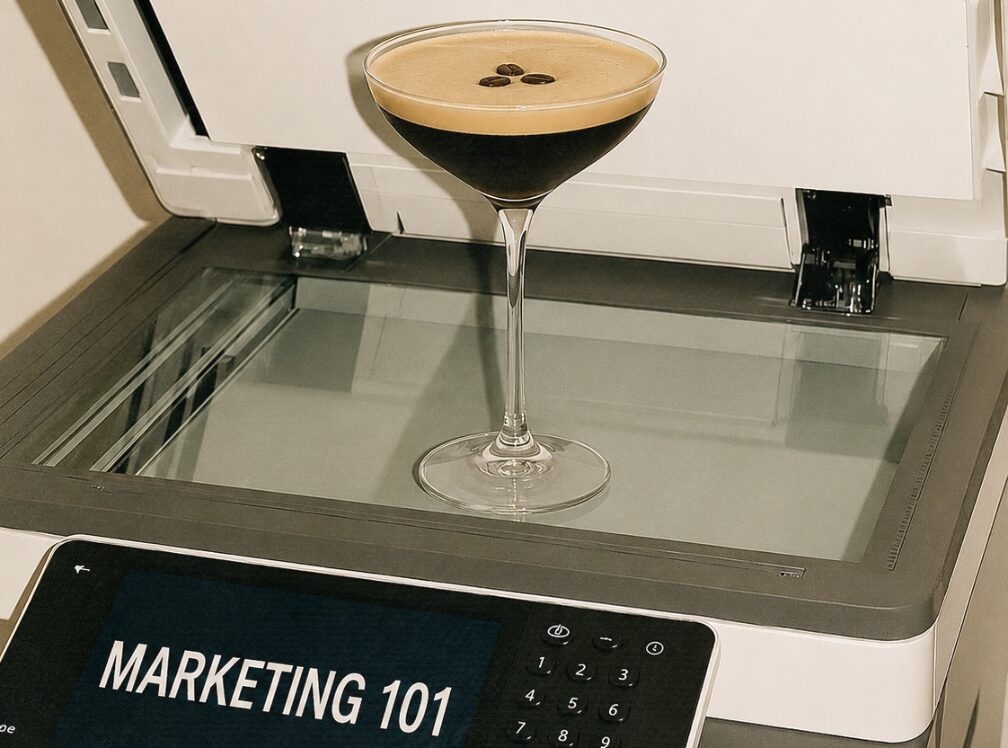
There is a certain genre of restaurant Instagram that looks absolutely stunning and generates almost no engagement. Every photo is perfectly lit. The grid is meticulously curated. The captions are elegant one-liners. And the account has 4,200 followers who occasionally double-tap and never visit.
Aesthetics matter. We are not dismissing the importance of visual quality in food and beverage. But aesthetics without strategy is interior design for an empty building.
What’s missing is almost always the same thing: a reason for someone to care. What story are you telling? Why should someone follow you, and more importantly, why should they keep following you? What value or entertainment or emotional connection does your account provide beyond “our food is pretty”?
A strong social media strategy starts with content pillars, which are the specific narrative lanes your brand consistently shows up in. Behind-the-scenes. Ingredient sourcing. Team culture. Seasonal storytelling. Community. Humor. A restaurant that posts food photos, food photos, and more food photos has one content pillar and a very short audience attention span to work with.
Instagram and TikTok are not the same platform with different logos. They have different audiences, different algorithms, different native content formats, and different cultural expectations. Posting the same content to both and hoping for the best is the social media equivalent of sending the same cover letter to every job.
Instagram rewards consistency, visual quality, and relationship-building with a community that already follows you. TikTok rewards entertainment, authenticity, and discoverability, meaning your content can reach people who have never heard of you if it genuinely engages them.
The brands doing both well are usually doing them intentionally differently. Their Instagram might be polished and brand-forward. Their TikTok might be rawer, more personality-driven, more willing to be weird. Both can be right for the same brand. But they require different thinking.
The question to ask for every piece of content is: would this feel native to the platform it’s going on? If a video looks like it was edited for Instagram and you’re just also posting it to TikTok, TikTok users will feel it and scroll past it.
Social media is not a broadcast channel. That is the point. It is a conversation platform, and brands that treat it like a one-way announcement feed are leaving most of the value on the table.
Engagement is not just a vanity metric. Platform algorithms use it as a signal to determine who sees your content. The more people interact with your posts, and the faster they do it after you post, the more the algorithm distributes that content to new eyes. You are not just talking to your followers. You are performing for the algorithm, which decides whether your content reaches anyone beyond them.
What drives engagement? Content that asks something of the viewer, whether that’s an opinion, a laugh, a save, a share, or a comment. A stunning pasta photo asks nothing. A stunning pasta photo with a caption that says “hot take: this is better than anything you’ll find in Italy, and we’ll defend that” invites a response.
This is not a call to be gimmicky. It’s a call to be interesting.
If you are a food and beverage brand that is still primarily posting static images in 2026, this is your friendly but firm intervention.
Video, and specifically short-form vertical video in the form of Reels and TikToks, is the dominant content format across every platform right now. The algorithms favor it. The audiences watch it. The discovery potential dwarfs what static content can achieve.
This does not mean every video needs to be a cinematic production. In fact, some of the most effective food and beverage video content is quite simple: a satisfying overhead pour, a cheese pull, a quick behind-the-scenes clip of prep. What matters more than production value is that the content hooks the viewer in the first two seconds and delivers on that hook.
The fear we hear most often is “we don’t have the equipment” or “we don’t have time.” A modern smartphone shoots beautiful video. Time is a real constraint. But an account that posts two videos a week consistently will outperform one that posts five static images every day, almost without exception.
The weeks around a grand opening or major launch produce the highest organic social engagement most brands will ever see. New followers. Media tags. Influencer reposts. Excited regulars sharing their first visits.
And then, two months later, posting slows down. Content quality drops. The account that launched with such energy starts to feel like it’s on autopilot.
This is the exact moment when your new audience is deciding whether to stick around or quietly unfollow. Consistency after the opening wave is no less important than the opening wave. It is arguably more important because it’s what converts a one-time visitor into a regular and a regular into a genuine community member.
Social media management is, as we often tell clients, a full-time job. Not because we’re trying to sell you something (we are a social media agency, but still), but because it genuinely requires consistent attention, creative output, community management, and strategic adjustment as platforms change. The brands that try to handle it as an afterthought usually produce afterthought results.
Follower count is the metric everyone wants to talk about. It is rarely the most useful one.
The numbers worth watching are engagement rate (what percentage of your audience is actually interacting with your content), reach (how many unique accounts are seeing your content, including non-followers), saves and shares (the deepest forms of engagement, indicating your content was valuable enough to keep or pass along), and link clicks or direct message volume if you’re using social as a traffic or conversion tool.
A brand with 8,000 highly engaged followers who regularly visit, order delivery, or drive to your location is more valuable than a brand with 40,000 passive followers who scroll past without stopping. Building toward the right numbers, not the biggest numbers, is the difference between a social strategy that serves your business and one that just serves your ego.
We helped Visit Bath County grow their engagement rate by 338.8% and their total engagements by 667.7% in nine months, with a net audience growth of over 3,200 followers. The follower number was real, but the engagement numbers were what actually moved the needle for the tourism board’s mission. That’s what a strategy-first approach produces.
And if all of this sounds like a full-time job that you don’t have bandwidth for, it’s because it is. That’s not a problem. That’s a solved problem by visiting our services.

Resplendent Agency is a boutique PR and social media agency with offices in Austin, Texas and Richmond, Virginia. We specialize in food and beverage, hospitality, travel, CPG, and lifestyle brands. Reach out to learn how we can build a media strategy that works as hard as you do.
Check out our work and its impact.